ENCYCLOPEDIC ENTRY
ENCYCLOPEDIC ENTRY
Calderas
Calderas
A caldera is a large depression formed when a volcano erupts and collapses.
Grades
5 - 8
Subjects
Earth Science, Geology, Geography, Physical Geography
Image
caldera
Laguna de Quiltoa a caldera in Ecuador.
Photograph by Obliot
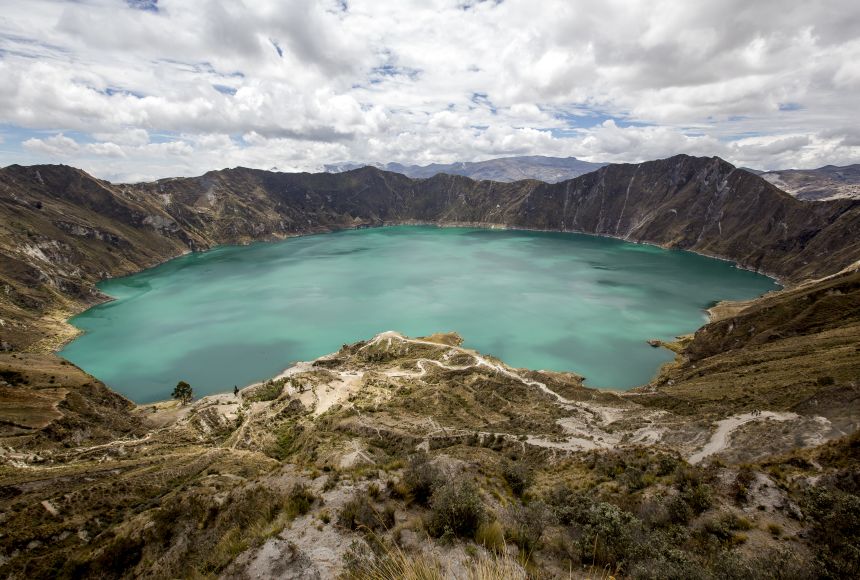
A caldera is a large depression formed when a volcano erupts and collapses. During a volcanic eruption, magma present in the magma chamber underneath the volcano is expelled, often forcefully. When the magma chamber empties, the support that the magma had provided inside the chamber disappears. As a result, the sides and top of the volcano collapse inward. Calderas vary in size from one to 100 kilometers (0.62 to 62 miles) in diameter.
Some calderas form a lake as the bowl-shaped depression fills with water. A famous example is Crater Lake, in Oregon. This caldera formed about 7,000 years ago when a stratovolcano, Mt. Mazama, violently erupted. For several thousand years after this eruption, smaller volcanic eruptions continued inside the caldera. One of these eruptions was so large it formed an island in Crater Lake named Wizard Island.
Calderas such as Crater Lake and those in Yellowstone National Park result from dramatic eruptions, but slower eruptions can also create calderas. This often occurs with shield volcanoes, which are typically flatter and more gradually sloped. Lava flows from shield volcanoes more slowly and often at regular intervals. Over time, this creates a series of nested depressions. The Kilauea caldera on Kilauea, one of the volcanoes that make up Hawai’i, is one example.
Another type of caldera is a resurgent caldera. These broad, vast calderas result when very large magma chambers empty quite forcefully, causing a series of pyroclastic flows. Over time, the refilling of the magma chamber pushes up the caldera floor. This upward movement is why the caldera is called resurgent, which means “risen again.”
Credits
Media Credits
The audio, illustrations, photos, and videos are credited beneath the media asset, except for promotional images, which generally link to another page that contains the media credit. The Rights Holder for media is the person or group credited.
Director
Author
Production Managers
Program Specialists
other
Last Updated
October 19, 2023
User Permissions
For information on user permissions, please read our Terms of Service. If you have questions about how to cite anything on our website in your project or classroom presentation, please contact your teacher. They will best know the preferred format. When you reach out to them, you will need the page title, URL, and the date you accessed the resource.
Media
If a media asset is downloadable, a download button appears in the corner of the media viewer. If no button appears, you cannot download or save the media.
Text
Text on this page is printable and can be used according to our Terms of Service.
Interactives
Any interactives on this page can only be played while you are visiting our website. You cannot download interactives.