ENCYCLOPEDIC ENTRY
ENCYCLOPEDIC ENTRY
Carthage
Carthage
The city of Carthage played an important role in the ancient Mediterranean until it ultimately met its demise at the hands of the Roman Republic.
Grades
9 - 12
Image
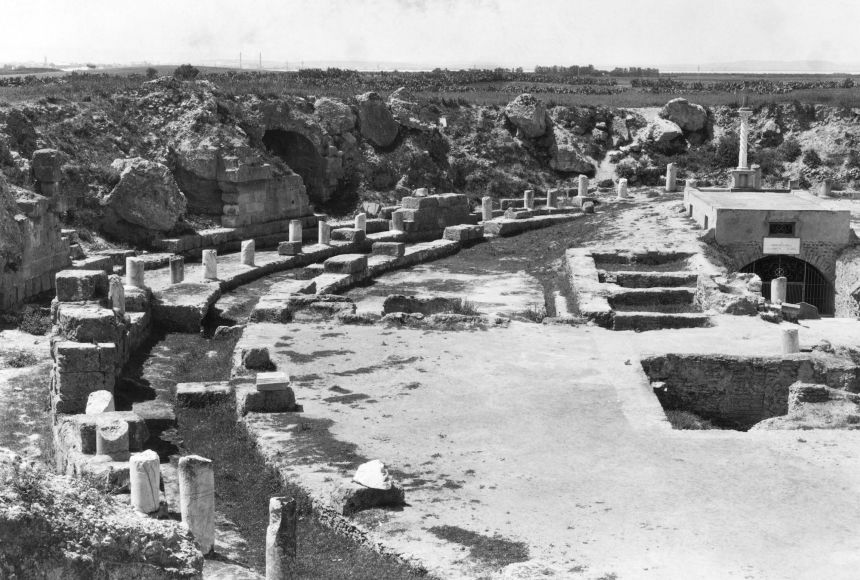
Carthage Roman Amphitheater
This image shows the ruins of a Roman amphitheater in Carthage, Tunisia.
National Geographic Creative
Carthage was an ancient Phoenician city located on the northern coast of Africa. Its name means “new city” or “new town.” Before the rise of ancient Rome, Carthage was the most powerful city in the region because of its proximity to trade routes and its impressive harbor on the Mediterranean.
At the height of its power, Carthage was the center of the Phoenician trade network. It eventually became the richest city in the entire Mediterranean region. It was full of extremely wealthy people and boasted a harbor containing over 200 docks.
As ancient Rome, which was Carthage’s neighbor in the Mediterranean, grew in power and expanded, a conflict between the two civilizations became inevitable. The rivalry between Carthage and Rome eventually erupted in the three Punic Wars, fought on land and sea.
Carthage did not fare well in the Punic Wars. In the first two, the city suffered some degree of failure. Carthage lost control of the island of Sicily after the first war and ceded even more territory after its defeat in the second war. Rome returned to lay siege to the city of Carthage during the Third Punic War. It took three years, but Carthage finally fell and was burned to the ground by Rome. The three Punic Wars were fought over the span of a hundred years.
Julius Caesar would reestablish Carthage as a Roman colony, and his successor, Augustus, supported its redevelopment. After several decades, Carthage became one of Rome’s most important colonies.
Today, the ruins of ancient Carthage lie in present-day Tunisia and are a popular tourist attraction.
Credits
Media Credits
The audio, illustrations, photos, and videos are credited beneath the media asset, except for promotional images, which generally link to another page that contains the media credit. The Rights Holder for media is the person or group credited.
Author
Producer
other
Last Updated
October 19, 2023
User Permissions
For information on user permissions, please read our Terms of Service. If you have questions about how to cite anything on our website in your project or classroom presentation, please contact your teacher. They will best know the preferred format. When you reach out to them, you will need the page title, URL, and the date you accessed the resource.
Media
If a media asset is downloadable, a download button appears in the corner of the media viewer. If no button appears, you cannot download or save the media.
Text
Text on this page is printable and can be used according to our Terms of Service.
Interactives
Any interactives on this page can only be played while you are visiting our website. You cannot download interactives.