ARTICLE
leveledARTICLE
Cells and the Versatile Functions of Their Parts
Cells and the Versatile Functions of Their Parts
Even the most basic parts of a cell can enable complex cellular processes, and multifunctional organelles expand these capabilities to make advanced activities possible for higher life-forms.
Grades
3 - 12
Subjects
Biology, Health
Image
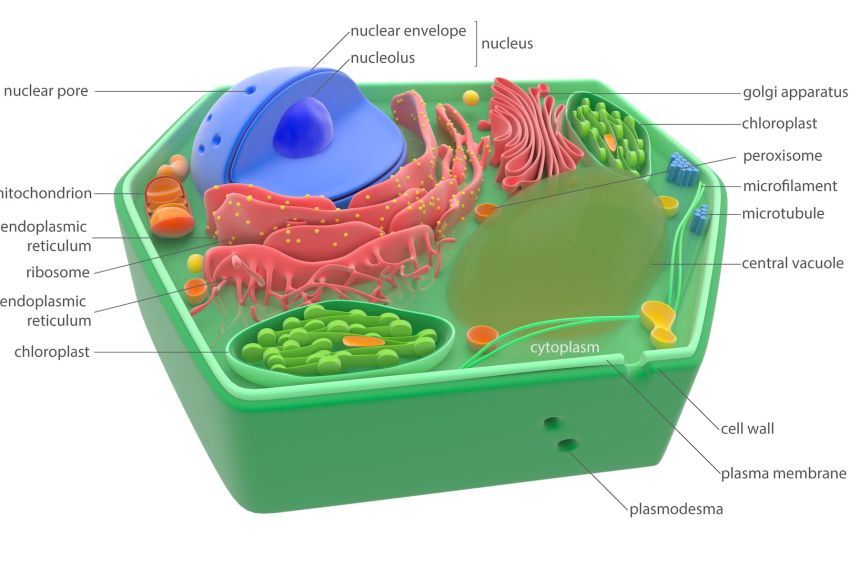
Plant Cell Illustration
Illustration of a plant cell with the various organelles labeled.
Illustration by SPL/Science Source

Cells are the basic building blocks of all life. These impressive, tiny structures can perform many tasks. This is true from the tiniest bacteria up to a human being. We're made up of trillions of cells.
Cells get rid of waste. They help repair tissues. They generate the energy that keeps us alive. These are just some of the many tasks that cells carry out.
Bacteria: Basic Cells
Some organisms consist of a single cell. They have just the most basic cell parts: genetic material (DNA), ribosomes, cytoplasm and a cell membrane.
Bacteria mainly consist of these most basic parts of a cell. They may be small, but bacteria can cause human illnesses, from mild food poisoning to deadly tuberculosis. Other bacteria help keep us healthy. Many bacteria live in the human gut. They help us digest and absorb nutrients.
Gene Transfer
DNA contains the instructions for how our bodies grow and work. It is passed on from parents to children. A gene is a section of DNA that tells a specific part of the body how to work.
Genetic material can exist in movable sections. This allows bacteria to exchange portions of DNA through a process called horizontal gene transfer.
In vertical gene transfer, a parent passes on DNA to children. Meanwhile, horizontal gene transfer involves genetic material moving from one living organism to another. It doesn't matter how these organisms are related.
This ability allows many bacteria to quickly resist antibiotics. Humans use antibiotics to fight unwanted bacteria. Some bacteria have genes that let them survive, though. Thanks to horizontal gene transfer, they can pass these genes to others.
Horizontal gene transfer is more common in single-celled organisms. These organisms are called prokaryotic. They don't have a nuclear membrane, which would protect the organism's DNA from outside DNA.
Yeast, Organelles and Fermentation
More complex single-celled organisms, such as yeast, are eukaryotes. Eukaryotic cells contain a nucleus—a kind of central control station—and other organelles. Organelles are like the cell's organs. They are parts of the cell that are in charge of special tasks.
For example, the organelles in yeast allow it to perform fermentation. Humans use fermentation to make bread, wine, and beer. Fermentation is possible because of certain enzymes within yeast that allow it to convert sugars into alcohol. Enzymes are proteins. Like all proteins, they are produced by ribosomes within a cell.
Cellular Slime Molds
Other single-celled organisms can combine to form a multicellular structure. One example is the cellular slime mold, a type of amoeba. When there aren't many nutrients in the environment, these cells band together in a slug-like form. Together, they migrate to find food. The cellular communication between amoebas during this coming together involves many cell parts.
At some point, the amoeba usually splits into stalk cells and spore cells. A large vacuole, or space, forms within stalk cells as they go through cell death and form a column. In this process, spore cells are lifted and then scattered to a new location.
Many cell parts play a role in this complex behavior of social amoebas. One example is the mitochondria. These are critical to cell movement and organizing the cells within the slug.
Plants, Animals and Specialized Cells
In true multicellular organisms, a variety of organelles allow equally incredible feats. Chloroplasts in plant cells allow the organism to grab the sun's energy and produce food. In a growing animal, for example, the cytoskeleton sorts critical parts and chemicals within the cell. It defines which end of the cell is which. In this way it helps enable specific functions as the tiny animal embryo, at first a tiny bundle of cells, grows and develops.
After development, specialized cells perform specific tasks to support the body. For example, mature red blood cells in mammals are cells with no nucleus. This helps clear out as much space as possible for a protein called hemoglobin. This protein allows the cell to carry oxygen from the lungs to the rest of the body.
White blood cells are part of the body's immune system. The immune system is a group of cells and organs that fight to protect the body. White blood cells use lysosomes to smother and destroy bacteria. This helps prevent infection and disease.
Neurons and the Brain
Neurons are cells in the human brain that allow problem solving, memory, and emotion. A neuron's cell parts are critical to these functions.
Neurons respond to something in the environment—say, a feeling of pain. They then release neurotransmitters. Organelles called Golgi bodies control when neurotransmitters are released. They can make special vesicles, or sacs, to transport neurotransmitters outside the neuron.
Neurons have a long axon fiber, which extends from the cell. Neurons send their chemical signals out through their axons. They also receive signals from neighboring cells. They receive signals through fingerlike catches called dendrites.
Credits
Media Credits
The audio, illustrations, photos, and videos are credited beneath the media asset, except for promotional images, which generally link to another page that contains the media credit. The Rights Holder for media is the person or group credited.
Director
Author
Production Managers
Program Specialists
other
Last Updated
August 20, 2026
User Permissions
For information on user permissions, please read our Terms of Service. If you have questions about how to cite anything on our website in your project or classroom presentation, please contact your teacher. They will best know the preferred format. When you reach out to them, you will need the page title, URL, and the date you accessed the resource.
Media
If a media asset is downloadable, a download button appears in the corner of the media viewer. If no button appears, you cannot download or save the media.
Text
Text on this page is printable and can be used according to our Terms of Service.
Interactives
Any interactives on this page can only be played while you are visiting our website. You cannot download interactives.