ENCYCLOPEDIC ENTRY
ENCYCLOPEDIC ENTRY
Coral
Coral
Corals are fascinating animals that form reefs. These reefs provide food and habitat for about 25 percent of the world’s fishes.
Grades
5 - 8
Subjects
Biology, Ecology, Earth Science, Oceanography
Image
Colorful Coral Reef
Though coral reefs are called such because of their sprawling colonies of coral, the shelter created by these coral colonies make reefs a virbant biodiveristy hotspot where coral, fish, algae, and hundreds of other species live together in a bustling ecos
Photograph by Christ Newbert / Minden Pictures
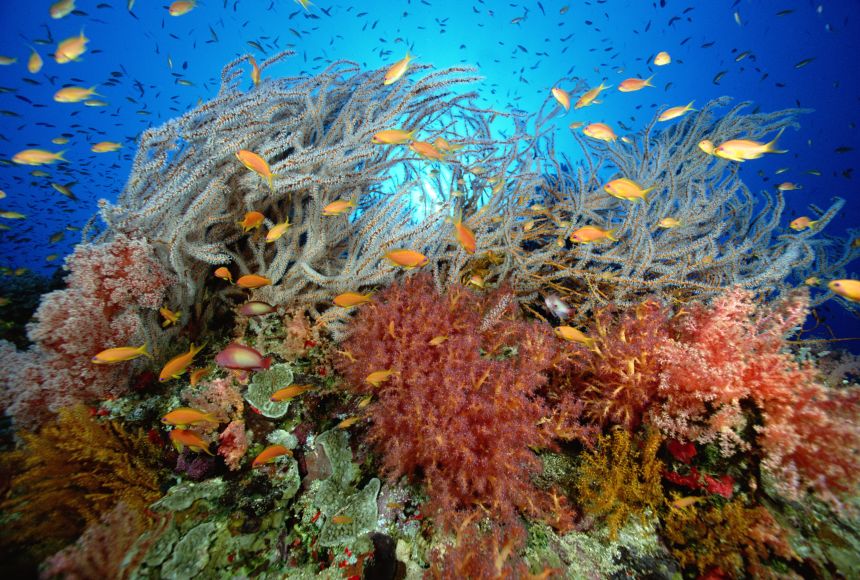

There are about 6,000 species of coral around the world, with some species growing in warm shallow waters near coastlines and others thriving on the dark, cold seafloor of the open ocean.
Though coral may look like a colorful plant growing from roots in the seafloor, it is actually an animal. Corals are known as colonial organisms, because many individual creatures live and grow while connected to each other. They are also dependent on one another for survival. The tiny, individual organisms that make up large coral colonies are called coral polyps. The polyps use ions in seawater to make limestone exoskeletons—skeletons outside the body—for themselves.
A coral polyp is shaped like a cylinder, with a mouth at one end, surrounded by tentacles. The arm-like tentacles gather food and sting creatures that threaten the coral. After food is digested, the polyp’s waste products exit through the mouth.
Coral polyp bodies are usually clear. The bright colors that characterize many corals are actually various types of algae growing in the polyp’s tissue. The presence of the algae, specifically a type of algae called zooxanthellae, helps the coral in several ways. For one, the algae remove waste from the coral. The algae also use the coral’s waste products for photosynthesis, which is how a plant makes its own food. Byproducts of photosynthesis include oxygen and carbohydrates, which the coral consumes and uses to build reefs. The mutually beneficial relationship between coral and algae is called symbiosis.
Coral reefs are among the most complex and fascinating marine ecosystems in the sea, and they include a wide range of symbiotic relationships. Coral reefs are sometimes known as the “rainforests of the sea.” Nearly a quarter of all the fish in the sea rely on healthy coral reefs. Corals provide habitats for fish and other organisms in the ocean. The Northwest Hawaiian Island coral reefs are home to about 7,000 species of plants and animals.
Coral reefs not only provide marine species with a rich habitat, but they also assist people as well. Millions of people around the world rely on fish caught in and around coral reefs. The reefs also draw in tourists, which helps the local economies. Coral reefs protect people and land from storms as well, serving as a barrier that reduces the impact of large waves on shore.
The protection of coral reefs is a high priority for many oceanographers and other marine conservationists. National Geographic Explorer Tracy Allie Turner is a coral reef scientist who hopes her research on reefs around the South Maldives will convince government leaders to designate more coral reefs as marine protected areas.
Further research and protection of coral reefs is important, in large part because the world has lost nearly 20 percent of its coral reefs, with many more reefs under threat today. Pollution and increasing ocean temperatures are two major causes of coral reef loss—a problem that can have long-reaching effects on humans and marine species alike. Both pollution and warming waters can cause coral bleaching, a process where stressed corals expel their symbiotic algae causing them to turn white. The absence of the zooxanthellae causes the coral to have a more limited access to food and this increases their susceptibility to diseases.
Credits
Media Credits
The audio, illustrations, photos, and videos are credited beneath the media asset, except for promotional images, which generally link to another page that contains the media credit. The Rights Holder for media is the person or group credited.
Director
Author
Production Managers
Program Specialists
other
Last Updated
November 21, 2024
User Permissions
For information on user permissions, please read our Terms of Service. If you have questions about how to cite anything on our website in your project or classroom presentation, please contact your teacher. They will best know the preferred format. When you reach out to them, you will need the page title, URL, and the date you accessed the resource.
Media
If a media asset is downloadable, a download button appears in the corner of the media viewer. If no button appears, you cannot download or save the media.
Text
Text on this page is printable and can be used according to our Terms of Service.
Interactives
Any interactives on this page can only be played while you are visiting our website. You cannot download interactives.