ENCYCLOPEDIC ENTRY
ENCYCLOPEDIC ENTRY
Genotypes
Genotypes
A genotype is the genetic makeup of an individual organism. Biologists use the term genotype to distinguish from phenotype, which are an organism’s observable characteristics.
Grades
8 - 12
Subjects
Biology, Genetics
Image
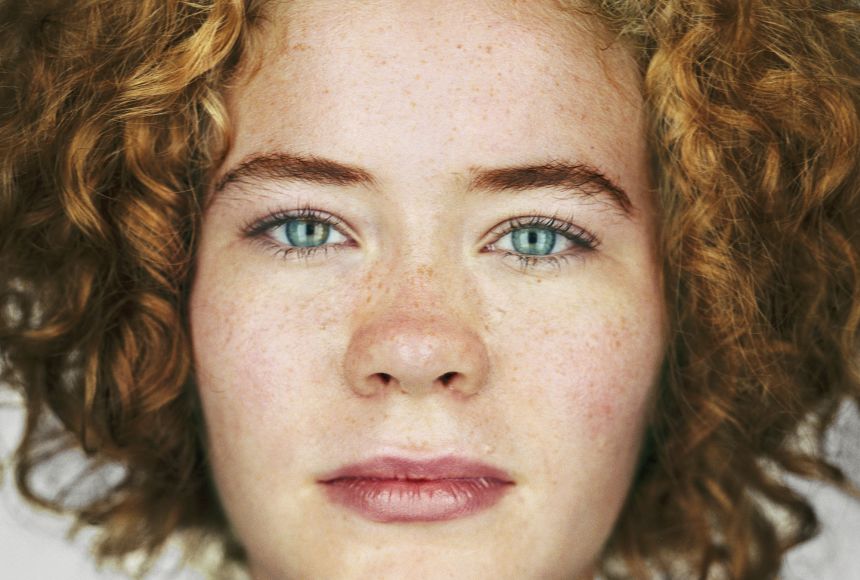
Female portrait
Many physical traits like hair color and texture, eye color, and skin color are determined by the genotypes that parents pass down to their children.
Photograph by Martin Schoeller
In one sense, the term “genotype”—like the term “genome”—refers to the entire set of genes in the cells of an individual organism. In a narrower sense, however, it can refer to different alleles, or variant forms of a gene, for particular traits or characteristics. An organism’s phenotype is the observable characteristic, such as height or skin color, that results from interactions between the organism’s genotype and its environment.
There is a complex connection between the genotype and the phenotype. Since the phenotype is the result of an interaction between genes and the environment, different environments can lead to different traits in individuals with a particular genotype. For example, genes influence an individual’s height, but environmental factors like nutrition can also affect how tall a person grows.
In addition, different genotypes can lead to the same phenotype. This happens because genes have more than one allele. For some genes and traits, certain alleles are dominant while others are recessive. A dominant trait is one that shows up in an individual even if the individual has only one allele that produces the trait.
On the other hand, for an organism to display a recessive trait, it must have two recessive alleles, one inherited from each parent. An example of this is a genetic disorder called cystic fibrosis, which is caused by a mutation in the cystic fibrosis transmembrane conductance regulator (CFTR) gene. Since the disorder is recessive, someone must have two copies of the mutated CFTR gene to develop cystic fibrosis. If a person has only one copy of the recessive allele, they will not develop the condition.
When discussing genotypes, biologists use uppercase letters to represent dominant alleles and lowercase letters to represent recessive alleles. An organism with two dominant alleles for a trait is said to have a homozygous dominant genotype, while an organism with one dominant allele and one recessive allele is said to have a heterozygous genotype. An organism with two recessive alleles is called homozygous recessive. In the cystic fibrosis example, the homozygous dominant, heterozygous and homozygous recessive genotypes are written CC, Cc and cc, respectively, and only an individual with the homozygous recessive genotype (cc) would have the disorder. The heterozygous genotype and the homozygous dominant genotype do not produce the disorder, though an individual with the heterozygous genotype can pass on the cystic fibrosis allele to their offspring.
Traits like cystic fibrosis follow a simple inheritance pattern known as Mendelian inheritance, but homozygous dominant, homozygous recessive and heterozygous genotypes only account for some genes and traits. Most traits, like blood type and eye color, follow more complex inheritance patterns. Many genes have more than two alleles, which can interact in complex ways, and traits can also be polygenic, meaning that multiple genes influence the trait. In these situations, it’s more difficult for scientists to determine an individual’s genotype for a specific trait.
Scientists used to think that eye color was determined in a similar way to cystic fibrosis, with combinations of dominant and recessive alleles controlling color. Brown eyes are typically dominant over blue eyes, however there are cases where two blue-eyed parents produce a brown-eyed child. If eye color inheritance worked the same way as cystic fibrosis, this would be impossible since people with blue eyes each have two copies of a recessive allele and no copies of the dominant, brown eye-color allele.
After further study of eye color genetics and genotypes, scientists discovered that multiple genes influence eye color. This is the reason why people can have green eyes, hazel eyes or any of a range of eye colors apart from blue or brown.
Scientists have also made significant progress in identifying genes that play major roles in human diseases, such as cancers. For example, based on a person’s specific genotype, scientists and doctors can predict the risk that person has of developing certain cancers. By knowing the risks associated with a person’s genotype, doctors can better recommend preventive steps and test for cancer more frequently in people at higher risk.
Credits
Media Credits
The audio, illustrations, photos, and videos are credited beneath the media asset, except for promotional images, which generally link to another page that contains the media credit. The Rights Holder for media is the person or group credited.
Director
Copyeditors
Production Managers
Producer
other
Last Updated
January 30, 2026
User Permissions
For information on user permissions, please read our Terms of Service. If you have questions about how to cite anything on our website in your project or classroom presentation, please contact your teacher. They will best know the preferred format. When you reach out to them, you will need the page title, URL, and the date you accessed the resource.
Media
If a media asset is downloadable, a download button appears in the corner of the media viewer. If no button appears, you cannot download or save the media.
Text
Text on this page is printable and can be used according to our Terms of Service.
Interactives
Any interactives on this page can only be played while you are visiting our website. You cannot download interactives.