ENCYCLOPEDIC ENTRY
ENCYCLOPEDIC ENTRY
Herbivore
Herbivore
An herbivore is an organism that feeds mostly on plants. Herbivores range in size from tiny insects such as aphids to large, lumbering elephants.
Grades
5 - 12+
Subjects
Biology, Ecology

Loading ...
An herbivore is an organism that mostly feeds on plants. Herbivores range in size from tiny insects such as aphids to large elephants.
Herbivores are a major part of the food web, a description of which organisms eat other organisms in the wild. Organisms in the food web are grouped into trophic, or nutritional, levels. There are three trophic levels. Autotrophs, organisms that produce their own food, are the first trophic level. These include plants and algae. Herbivores, which eat autotrophs, are the second trophic level. Carnivores, organisms that consume animals and omnivores, organisms that consume both plants and animals, are the third trophic level.
Autotrophs are called producers, because they produce their own food. Herbivores, carnivores, and omnivores are consumers. Herbivores are primary consumers. Carnivores and omnivores are secondary consumers.
Herbivores often have physical features that help them eat tough, fibrous plant matter. Unlike herbivores and other consumers, autotrophs have tough cell walls throughout their physical structure. Cell walls can make plant material difficult to digest.
Many herbivorous mammals have wide molars. These big teeth help them grind up leaves and grasses. Carnivorous mammals, on the other hand, usually have long, sharp teeth that help them grab prey and rip it apart.
A group of herbivores called ruminants have specialized stomachs. For the digestion of plant matter, ruminant stomachs have more than one chamber. When a ruminant chews up and swallows grass, leaves and other material, it goes into the first chamber of its stomach, where it sits and softens. There, specialized bacteria break down the food. When the material is soft enough, the animal regurgitates the food and chews it again. This helps break down the plant matter. This partially digested food is called cud. The animal then swallows the cud, and it goes into a second chamber of the stomach. Chemicals in the second chamber digest the plant material further, and it goes into the third chamber. Finally, the digested food goes to the fourth chamber, which is similar to a human stomach. Sheep, deer, giraffes, camels and cattle (Boa taurus) are all ruminants.
Picky Eaters
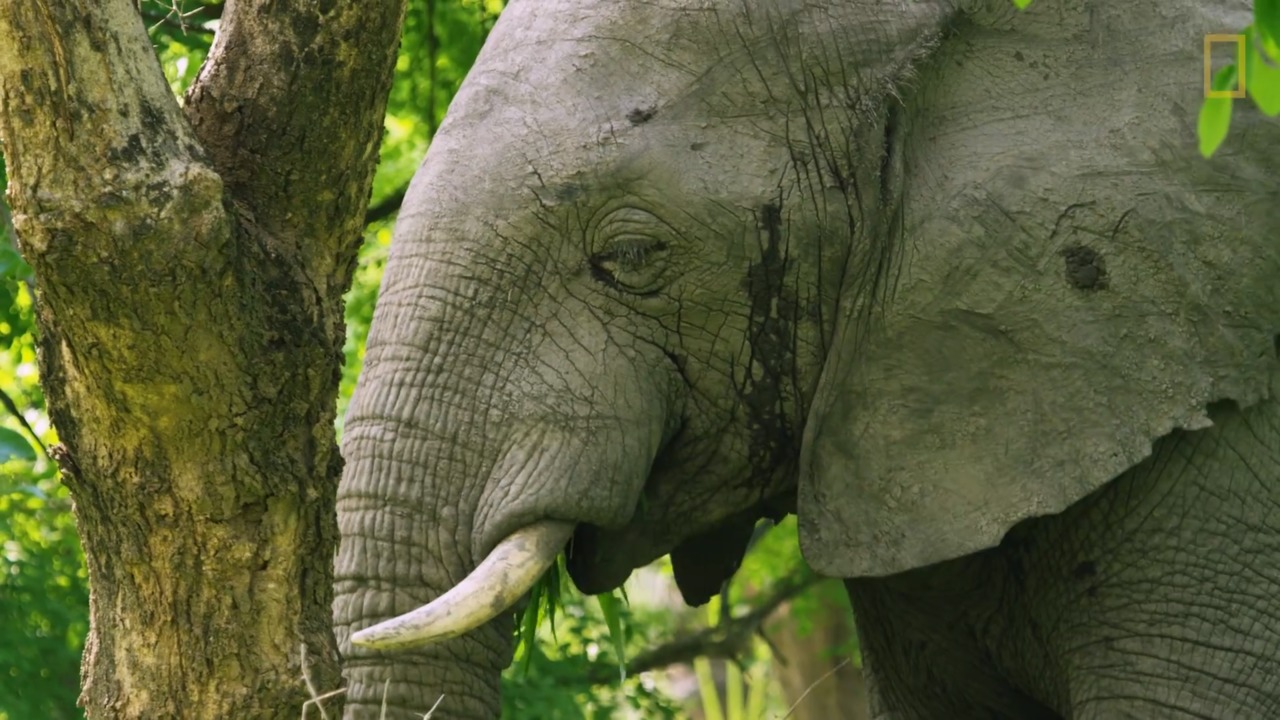
Some herbivores eat any plant matter they can find. Elephants, for example, eat bark, leaves, small branches, roots, grasses and fruit. Black rhinoceroses (Diceros bicornis) also eat a variety of fruits, branches and leaves.
Other herbivores eat only one part of a plant. An animal that specializes in eating fruit is called a frugivore. Oilbirds (Steatornis caripensis), which live in northern South America, are frugivores. They eat nothing but the fruit of palms and laurels. The koala (Phascolarctos cinereus), which is native to Australia, eats little besides the leaves of eucalyptus trees. An animal that eats the leaves and shoots of trees is called a folivore. Pandas (Ailuropoda melanoleuca), which feed almost exclusively on bamboo, are folivores. Termites are insects that feed mostly on wood. Wood-eaters are called xylophages.
Many insects are herbivores. Some, such as grasshoppers, will eat every part of a plant. Others specialize in certain parts of the plant. Aphids drink sap, a sticky fluid that carries nutrients through the plant. Caterpillars eat leaves. The larvae, or young wormlike forms, of root weevils feed on roots. Asian long-horned beetles (Anoplophora glabripennis) tunnel deep into the heart of a tree and eat the wood there. Honeybees feed on nectar and pollen from flowers.
Some herbivores consume only dead plant material. These organisms are called detritivores. Detritivores also consume other dead organic material, such as decaying animals, fungi, and algae. Detritivores such as earthworms, bacteria and fungi are an important part of the food chain. They break down the dead organic material and recycle nutrients back into the ecosystem. Detritivores can survive in many places. Earthworms and mushrooms live in the soil. There are also detritivore bacteria at the bottom of the ocean.
Plants that are parasites can still be considered herbivores. A parasite is an organism that lives on or in another organism and gets its nutrients from it. Parasitic plants get their nutrients from other plants, called host plants. Dodder, native to tropical and temperate climates around the world, is a parasitic vine that wraps around a host plant. Dodder has rootlike parts called haustoria that attach to the host plant, so it can feed on its nutrients. Eventually, the parasitic dodder feeds on all the nutrients of the host plant, and the host plant dies. The dodder vines then move on to another plant.
Herbivores in the Food Chain
Many herbivores spend a large part of their life eating. Elephants need to eat about 130 kilograms (300 pounds) of food a day. It takes a long time to eat that many leaves and grass, so elephants sometimes eat for 18 hours a day.
Herbivores depend on plants for their survival. If the plant population declines, herbivores cannot get enough food. Beavers, for example, feed on trees and plants that live near water. If the trees are removed to build houses and roads, the beaver population cannot survive.
Similarly, many carnivores need herbivores to survive. Herbivorous zebras and gazelles once traveled in great herds across the savannas of Africa. But these herds have shrunk and are now mostly confined to parks and wildlife reserves. As the number of these herbivores declines, carnivores such as African wild dogs (Lycaon pictus), which prey on them, also decline. Scientists estimate that only 3,000 to 5,500 African wild dogs remain in the wild.
In some places, the disappearance of large carnivores has led to an overpopulation of herbivores. Wolves (Canis lupus) and cougars (Puma concolor) are traditional predators, or hunters, of white-tailed deer (Odocoileus virginianus), which are herbivores. Hunting and expanding human settlements have practically eliminated these predators from the northeastern United States. Without its natural predators, the population of white-tailed deer has skyrocketed. In some areas, there are so many deer that they cannot find enough food. They now frequently stray into towns and suburbs in search of food.
Credits
Media Credits
The audio, illustrations, photos, and videos are credited beneath the media asset, except for promotional images, which generally link to another page that contains the media credit. The Rights Holder for media is the person or group credited.
Writers
Illustrators
Editors
Educator Reviewer
Producer
other
Last Updated
August 20, 2026
User Permissions
For information on user permissions, please read our Terms of Service. If you have questions about how to cite anything on our website in your project or classroom presentation, please contact your teacher. They will best know the preferred format. When you reach out to them, you will need the page title, URL, and the date you accessed the resource.
Media
If a media asset is downloadable, a download button appears in the corner of the media viewer. If no button appears, you cannot download or save the media.
Text
Text on this page is printable and can be used according to our Terms of Service.
Interactives
Any interactives on this page can only be played while you are visiting our website. You cannot download interactives.