ENCYCLOPEDIC ENTRY
ENCYCLOPEDIC ENTRY
Igneous Rocks
Igneous Rocks
Igneous rocks are one of three main types of rocks (along with sedimentary and metamorphic), and they include both intrusive and extrusive rocks.
Grades
5 - 8
Subjects
Earth Science, Geology
Image
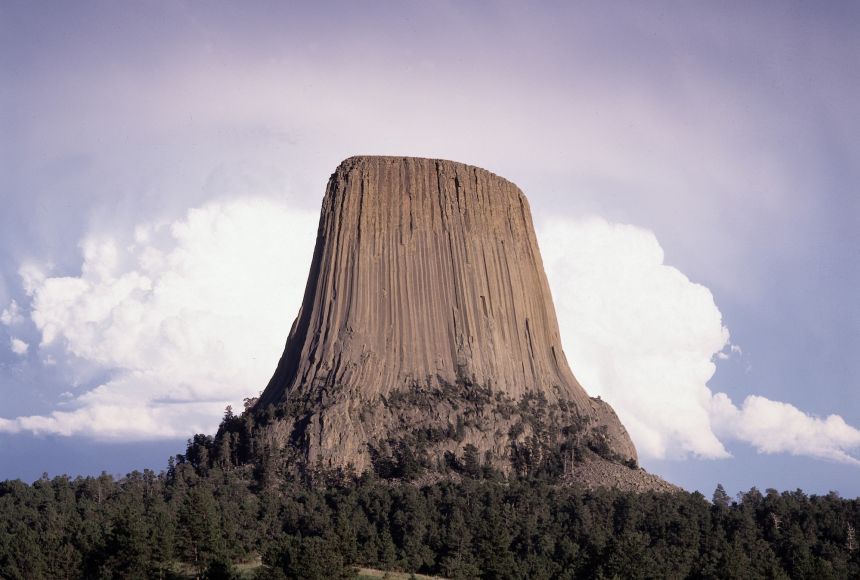
Devils Tower Rock
Devil's Tower National Monument in Wyoming is an example of an igneous rock.
Photograph by Koumlhn/ullstein bild courtesy of Getty Images
Igneous rocks form when magma (molten rock) cools and crystallizes, either at volcanoes on the surface of the Earth or while the melted rock is still inside the crust. All magma develops underground, in the lower crust or upper mantle, because of the intense heat there.
Igneous rocks can have many different compositions, depending on the magma they cool from. They can also look different based on their cooling conditions. For example, two rocks from identical magma can become either rhyolite or granite, depending on whether they cool quickly or slowly.
The two main categories of igneous rocks are extrusive and intrusive. Extrusive rocks are formed on the surface of the Earth from lava, which is magma that has emerged from underground. Intrusive rocks are formed from magma that cools and solidifies within the crust of the planet.
When lava comes out of a volcano and solidifies into extrusive igneous rock, also called volcanic, the rock cools very quickly. Crystals inside solid volcanic rocks are small because they do not have much time to form until the rock cools all the way, which stops the crystal growth. These fine-grained rocks are known as aphanitic—from a Greek word meaning “invisible.” They are given this name because the crystals that form within them are so small that they can be seen only with a microscope. If lava cools almost instantly, the rocks that form are glassy with no individual crystals, like obsidian. There are many other kinds of extrusive igneous rocks. For example, Pele’s hair is long, extremely thin strands of volcanic glass, while pahoehoe is smooth lava that forms shiny, rounded piles.
Intrusive rocks, also called plutonic rocks, cool slowly without ever reaching the surface. They have large crystals that are usually visible without a microscope. This surface is known as a phaneritic texture. Perhaps the best-known phaneritic rock is granite. One extreme type of phaneritic rock is called pegmatite, found often in the U.S. state of Maine. Pegmatite can have a huge variety of crystal shapes and sizes, including some larger than a human hand.
Credits
Media Credits
The audio, illustrations, photos, and videos are credited beneath the media asset, except for promotional images, which generally link to another page that contains the media credit. The Rights Holder for media is the person or group credited.
Director
Author
Production Managers
Program Specialists
Producer
Intern
other
Last Updated
October 19, 2023
User Permissions
For information on user permissions, please read our Terms of Service. If you have questions about how to cite anything on our website in your project or classroom presentation, please contact your teacher. They will best know the preferred format. When you reach out to them, you will need the page title, URL, and the date you accessed the resource.
Media
If a media asset is downloadable, a download button appears in the corner of the media viewer. If no button appears, you cannot download or save the media.
Text
Text on this page is printable and can be used according to our Terms of Service.
Interactives
Any interactives on this page can only be played while you are visiting our website. You cannot download interactives.