ARTICLE
leveledARTICLE
Maybe It’s Cold Outside
Maybe It’s Cold Outside
Blizzards are predicted to become more intense in the face of climate change, despite shorter winters and rising global temperatures.
Grades
2 - 12
Subjects
Biology, Conservation, Earth Science, Climatology, Geography
Image
Snowzilla
The aptly named blizzard "Snowzilla" hit the Northeastern United States in January of 2016, causing great damage to the area.
Photograph by Joe Flood
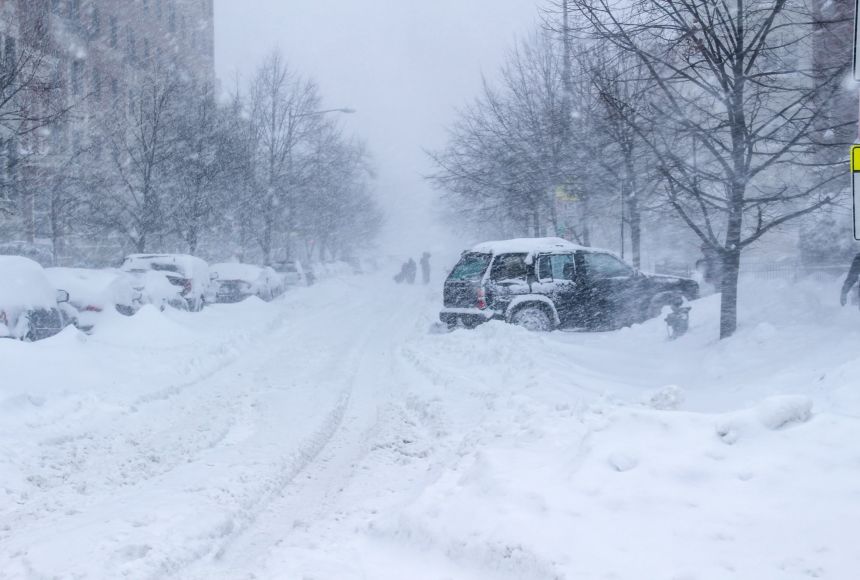

Blizzards are strong winter storms. Snowfall is heavy and winds are strong. They can be dangerous. Sometimes, you cannot see very well. There have been many strong blizzards in the last few years. They have hit the East Coast of the United States. One was so bad it was called "Snowzilla."
Humans Contribute to Climate Change
Weather is the day-to-day events in the atmosphere. It is the forecast for clouds and rain one day, and a sunny day the next. Blizzards are part of the weather. But they are affected by climate change. Climate change is the average weather of an area. It keeps track of 30 years of weather. Climate change is caused by humans. The gases, coal, and oil we burn release carbon dioxide. It is a greenhouse gas. The Earth needs it to stay warm. But too much carbon dioxide is making the Earth too hot. The temperature of the Earth is going up.
Scientists say that climate change makes blizzards stronger. There is more water in the air when it is warm. More moisture goes into the air when the seas get warmer. This moisture falls back to Earth. It is the rain and snow. All of this moisture makes storms stronger. It also makes them happen more. This makes blizzards stronger. They happen where it still gets cold.
Changing Climate Conditions
Climate change affects ice and glaciers. Sea ice reflects sunlight. But the ice is melting in the Arctic. Now, the sunlight warms up the ocean. The hot seas make the ice melt more. It makes the Arctic warm up faster than other places. It also changes the weather in other parts of the world. Snow reflects sunlight. Less snow means more water. Dark ocean water absorbs sunlight. Water becomes warmer. More ice melts. This changes weather patterns in other parts of the world. It can cause severe winter weather.
We can see the effect of global warming on the atmosphere. The jet stream is a fast-moving flow of air. It moves in the lowest region of the atmosphere. The stream moves fast when it is cold in the north and warm to the south. The warming Arctic makes the stream move slower. It stops moving in a straight path. It weaves north and south. This pulls Arctic air down from the north. Blizzards happen easily. So do polar vortex storms.
Credits
Media Credits
The audio, illustrations, photos, and videos are credited beneath the media asset, except for promotional images, which generally link to another page that contains the media credit. The Rights Holder for media is the person or group credited.
Director
Author
Production Managers
Program Specialists
Producer
other
Last Updated
January 14, 2025
User Permissions
For information on user permissions, please read our Terms of Service. If you have questions about how to cite anything on our website in your project or classroom presentation, please contact your teacher. They will best know the preferred format. When you reach out to them, you will need the page title, URL, and the date you accessed the resource.
Media
If a media asset is downloadable, a download button appears in the corner of the media viewer. If no button appears, you cannot download or save the media.
Text
Text on this page is printable and can be used according to our Terms of Service.
Interactives
Any interactives on this page can only be played while you are visiting our website. You cannot download interactives.