ENCYCLOPEDIC ENTRY
ENCYCLOPEDIC ENTRY
Microplastics
Microplastics
Microplastics are tiny plastic particles that result from both commercial product development and the breakdown of larger plastics. As a pollutant, microplastics can be harmful to the environment and animal health.
Grades
5 - 12
Subjects
Biology, Ecology, Conservation, Earth Science, Oceanography
Image
Microplastics
Living organisms tangled in microplastics. A sample of water collected off the coast of Hawaii shows how intertwined microplastics are in the daily lives of marine animals.
Photograph by David Liitschwager
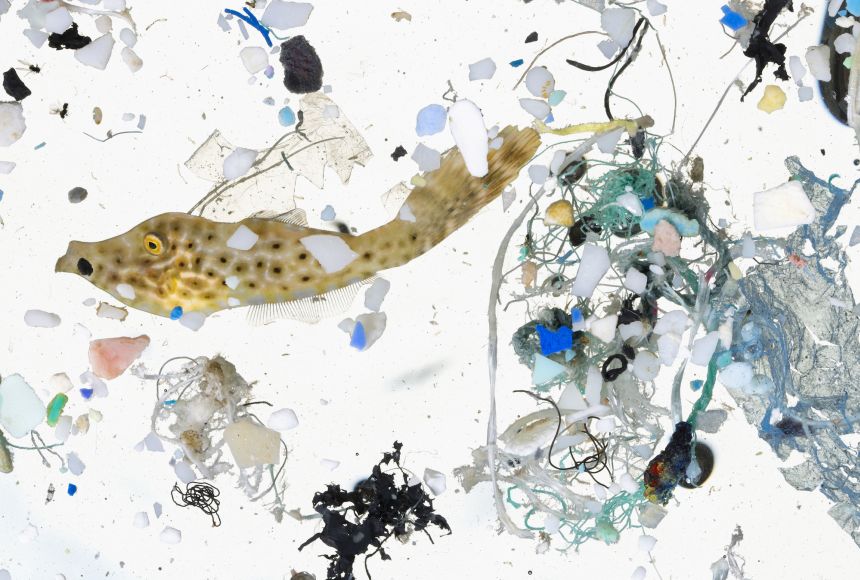

Microplastics, as the name implies, are tiny plastic particles. Officially, they are defined as plastics less than five millimeters (0.2 inches) in diameter—smaller in diameter than the standard pearl used in jewelry. There are two categories of microplastics: primary and secondary.
Primary microplastics are tiny particles designed for commercial use, such as cosmetics, as well as microfibers shed from clothing and other textiles, such as fishing nets. Secondarymicroplastics are particles that result from the breakdown of larger plastic items, such as water bottles. This breakdown is caused by exposure to environmental factors, mainly the sun’s radiation and ocean waves.
The problem with microplastics is that—like plastic items of any size—they do not readily break down into harmless molecules. Plastics can take hundreds or thousands of years to decompose—and in the meantime, wreak havoc on the environment. On beaches, microplastics are visible as tiny multicolored plastic bits in sand. In the oceans, microplastic pollution is often consumed by marine animals.
Some of this environmental pollution is from littering, but much is the result of storms, water runoff, and winds that carry plastic—both intact objects and microplastics—into our oceans. Single-use plastics—plastic items meant to be used just once and then discarded, such as a straw—are the primary source of secondary plastics in the environment.
Microplastics have been detected in marine organisms from plankton to whales, in commercial seafood, and even in drinking water. Alarmingly, standard water treatment facilities cannot remove all traces of microplastics. To further complicate matters, microplastics in the ocean can bind with other harmful chemicals before being ingested by marine organisms.
Scientists are still unsure whether consumed microplastics are harmful to human or animal health—and if so, what specific dangers they may pose. Even so, many countries are taking action to reduce microplastics in the environment. A 2017 United Nations resolution discussed microplastics and the need for regulations to reduce this hazard to our oceans, their wildlife, and human health.
Credits
Media Credits
The audio, illustrations, photos, and videos are credited beneath the media asset, except for promotional images, which generally link to another page that contains the media credit. The Rights Holder for media is the person or group credited.
Director
Author
Production Managers
Program Specialists
Producer
other
Last Updated
October 31, 2023
User Permissions
For information on user permissions, please read our Terms of Service. If you have questions about how to cite anything on our website in your project or classroom presentation, please contact your teacher. They will best know the preferred format. When you reach out to them, you will need the page title, URL, and the date you accessed the resource.
Media
If a media asset is downloadable, a download button appears in the corner of the media viewer. If no button appears, you cannot download or save the media.
Text
Text on this page is printable and can be used according to our Terms of Service.
Interactives
Any interactives on this page can only be played while you are visiting our website. You cannot download interactives.