ENCYCLOPEDIC ENTRY
ENCYCLOPEDIC ENTRY
MRSA
MRSA
Methicillin-resistant Staphylococcus aureus, or MRSA, can lead to skin infections. When untreated, this type of staph infection can be life-threatening to humans.
Grades
5 - 8
Subjects
Biology, Health
Image
MRSA
This electron micrograph depicts a human neutrophil ingesting methicillin resistant Staphylococcus aureus, or MRSA.
Photograph by the National Institutes of Health
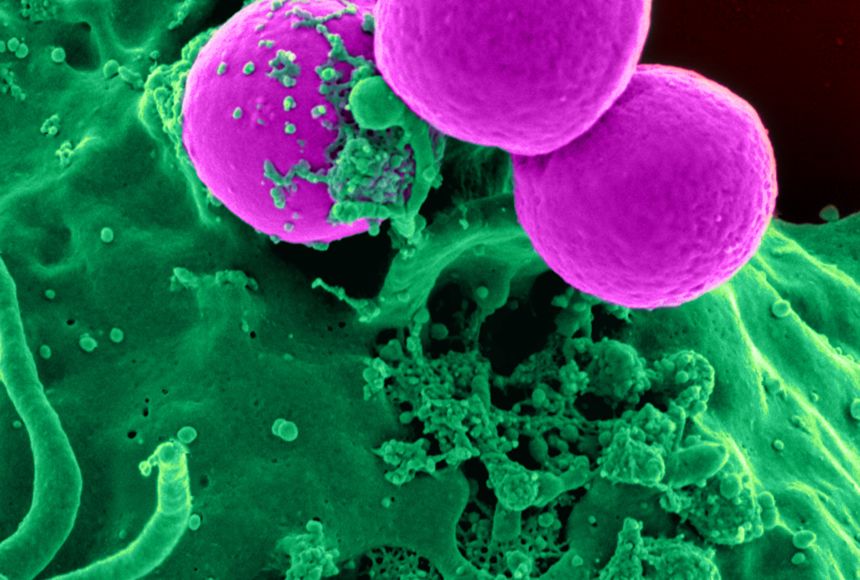
Commonly known as MRSA, methicillin-resistant Staphylococcus aureus is a type of bacteria that can be found on the skin and is usually harmless. However, when it goes inside the human body, through a cut or broken skin, it can cause problems.
Humans can contract MRSA in a hospital or through other contact in everyday life. In a hospital, people are generally more vulnerable if they are sick and have a weakened immune system. MRSA can reside on medical devices that, when used on a patient, can infect them. In addition to contracting MRSA in hospitals, people can get it when they participate in contact sports, since MRSA can travel from skin to skin and enter a person’s body through a cut or wound.
MRSA is known to spread through intravenous drug use, particularly when people share needles to inject drugs, such as heroin or other injection drugs. In fact, MRSA infections are more common among people who inject drugs than those who do not, likely due to the use of nonsterile needles.
MRSA can affect humans in various ways. The most minor MRSA infection is a skin infection. Depending on where in the body the infection occurs, MRSA can cause redness, discomfort, pain, fever, and swelling in the infected area. An infection can resemble the look of a spider bite and is sometimes filled with pus. Lab tests are important for a doctor to confirm that an infection is caused by MRSA.
The infection can become serious when MRSA travels further into the body. It can infect bones, blood, joints, the heart, and lungs. When this happens, the infection can become life-threatening.
There are various ways to prevent the spread of MRSA, including covering wounds while they heal, refraining from popping a pus-filled MRSA infection, washing hands with soap often, using alcohol hand rubs after touching an infected area, and not sharing personal items like razors and towels. Prevention of MRSA is important because MRSA is resistant to many of the most common and readily available antibiotics, including methicillin, penicillin, oxacillin, and amoxicillin. Due to MRSA’s antibiotic resistance, treatment is often difficult. Fortunately, it can be treated by a few other antibiotics, as well as with other methods, such as draining infected abscesses.
Credits
Media Credits
The audio, illustrations, photos, and videos are credited beneath the media asset, except for promotional images, which generally link to another page that contains the media credit. The Rights Holder for media is the person or group credited.
Director
Author
Production Managers
Program Specialists
other
Last Updated
October 19, 2023
User Permissions
For information on user permissions, please read our Terms of Service. If you have questions about how to cite anything on our website in your project or classroom presentation, please contact your teacher. They will best know the preferred format. When you reach out to them, you will need the page title, URL, and the date you accessed the resource.
Media
If a media asset is downloadable, a download button appears in the corner of the media viewer. If no button appears, you cannot download or save the media.
Text
Text on this page is printable and can be used according to our Terms of Service.
Interactives
Any interactives on this page can only be played while you are visiting our website. You cannot download interactives.