ARTICLE
ARTICLE
Think Like an Explorer: News Literacy
Think Like an Explorer: News Literacy
News literacy is the ability to apply journalistic standards to news and other information to evaluate its credibility. National Geographic Explorer and digital literacy educator Yael Crupnicoff shares her insight on fighting disinformation.
Grades
6 - 12
Subjects
Reading, Education, English Language Arts, Social Studies
Image
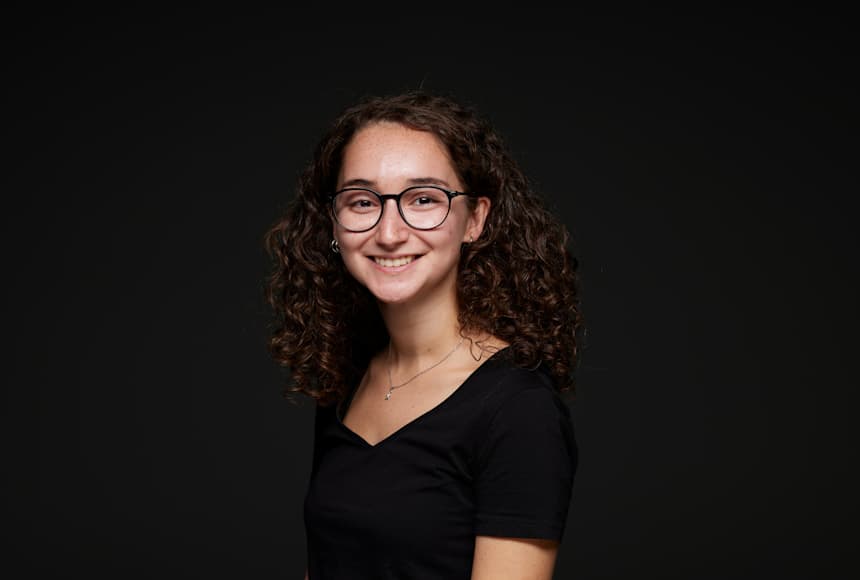
Yael Crupnicoff
Mark Thiessen/National Geographic
News literacy is the ability to apply journalistic standards to news and other information to evaluate its credibility. As institutional standards have eroded, AI-generated images and disinformation spread on social media and paywalls restrict access to reliable news, news literacy is more crucial than ever. Some key news literacy concepts include recognizing fact vs. opinion, vetting information sources, noticing and evaluating bias, and understanding journalistic standards.
These concepts are part of a broader skill set known as media literacy. Media literacy is the ability to apply critical thinking skills to analyze all forms of mass media, including news, advertisements, TV series, movies, books, social media posts and more. In today’s world of rapid news cycles and constant information exposure, building and maintaining strong media literacy skills is a crucial aspect of civic engagement and informed decision-making.
Fact vs. Opinion
One of the first steps in developing news literacy is learning to distinguish between fact and opinion. Facts can be verified as true or proven false through evidence. Opinions, on the other hand, are an expression of an individual’s personal view or judgment of an issue. “Water boils at 100 degrees Celsius at standard pressure at sea level” is a fact, because there is objective evidence that it is true. Meanwhile, “water is a tasty drink” is an opinion, because it reflects the writer’s personal feelings about water.
In news media, articles may blend facts and opinions. For example, pieces labeled as “op-eds” or “editorials” express the author’s opinion, though ethical and experienced writers typically use facts to support their opinion. When a writer presents a piece of information as a fact, they should provide the source for their claim. If no source is listed, it is important to conduct research in order to find the information repeated elsewhere in a reliable source, such as an academic article or a reference publication. For example, if you look up “what is the boiling point of water” on a search engine, you can find a result from Britannica confirming that water boils at 100 degrees Celsius.
An exception to the rule of naming sources for fact claims is common knowledge. Most academic and journalistic style guides do not require citations for facts that are considered common knowledge, which is information that is generally believed to be known by everyone. However, “common knowledge” is a broad term, and different people have different ideas of what can be considered common knowledge. “Earth orbits the sun” is an example of a fact that is generally considered common knowledge.
Evaluating Information
The internet has made it possible for just about anyone to make content available to the public, but not all content is created equal. An independent content creator may or may not be a trained journalist, and they may lack the proper skillset to do good research and reporting. Reputable news outlets follow ethical guidelines, have a fact-checking process in place to verify information with sources, and issue corrections when they do make mistakes.
Meanwhile, unreliable websites or social media creators may focus primarily on generating ad revenue or partnership revenue by attracting attention, incentivizing them to put out emotionally charged, shocking and possibly inaccurate headlines. Mainstream news organizations are not always above “clickbait” behavior either, but they are held to a higher standard both by the public and by their internal processes.
It is essential to learn about primary and secondary sources, as well as the difference between peer-reviewed research, on-the-ground reporting and opinion. Cross-checking stories with multiple reputable sources is a useful habit that builds a deeper understanding of a topic than reading a single source. It is also useful to learn how to evaluate information for its accuracy in other ways.
A notable and amusingly-named tool for evaluating information is the CRAAP Test developed in 2004 by Sarah Blakeslee, a librarian at the Meriam Library California State University, Chico. The “CRAAP” acronym stands for Currency, Relevance, Authority, Accuracy and Purpose. The UChicago library website has a detailed page describing the CRAAP test, as well as other information evaluation strategies like the SIFT method and the SMART check.
Recognizing Bias
Although standard news is meant to be unbiased, there is no such thing as an unbiased perspective. All news is written through the perspective of its author and the news organization that employs them, and the same facts can be used to serve different agendas. Recognizing bias does not mean rejecting a source altogether. Instead, it means staying aware of how the presentation of facts or opinions may be influenced by factors like economic incentive, personal involvement, cultural values, religious beliefs, and more.
Bias can be very subtle. Even something as simple as the choice of vocabulary used, the grammatical construction of a sentence, or the perspective through which a story is told can be a source of bias. For example, the headline “Man Dies in Police Custody” is very different from “Man Killed by Police,” even if they describe the same event. Likewise, an op-ed written by an executive of an oil company is likely to communicate a more positive view on the use of oil than an op-ed written by an environmental activist.
News literacy requires evaluating sources, phrasing, framing, and more. Readers should ask themselves questions like: Who wrote this article? What are their credentials? What is their stake in the issue the article describes? What evidence is provided, and where does it come from? What are the other sides of the story? Are multiple perspectives present? What emotions is the author trying to evoke, and why? What is the political leaning of the publication that put out this article, and how can that influence the information presented? It is also important for readers to understand their own biases and how these might shape their interpretations.
Understanding Journalistic Standards
While journalistic standards vary across the different journalistic organizations around the world, there are themes that most journalistic codes of conduct have in common. For example, factual accuracy/truth, impartiality and fairness are all principles that appear in the International Federation of Journalists’ Global Charter of Ethics for Journalists, the Society of Professional Journalists’ Code of Ethics, the New York Times’ Ethical Journalism handbook, the American Society of Newspaper Editors’ Statement of Principles, and the Associated Press Statement of News Values and Principles.
Journalists that work for reliable publications are held to the ethical standards enforced by that publication, and independent journalists with training in their field know and should adhere to these standards as well. However, many internet content creators are not journalists, and thus do not have any training in ethical journalistic conduct or an employer who would hold them accountable. Professional journalists are also held to a higher standard for reporting and fact-checking practices.
Misinformation, Disinformation and AI
Misinformation is false information spread by people who don’t realize that it’s not true. Disinformation, on the other hand, is false information spread with the intention of being misleading or manipulative. The World Economic Forum’s 2024 Global Risk Report identified misinformation and disinformation as serious threats in the coming years, with an emphasis on the impact of misinformation and disinformation on propaganda and censorship.
The introduction of generative AI tools such as ChatGPT and Midjourney, among others, has sparked an unprecedented change in the information landscape. Generative AI tools can create realistic images, videos, and text that are difficult to distinguish from human-made content. Deepfakes, which are videos made or manipulated using generative AI software to make it appear someone said or did something they never did, can spread quickly and go viral before being debunked. A 2020 study published in the Journal of Experimental Political Science found that in 50% of cases, readers could not tell the difference between news created by a person and news generated by AI.
Another issue is the proliferation of common misinformation through AI chatbots like ChatGPT. These chatbots are large language models (LLMs) trained on large sets of human-generated content. Chatbots can’t distinguish between fact and fiction or evaluate the sources of content they’re trained upon, so they may repeat untrue information from unreliable sources. AI chatbots may also respond to questions and other prompts with “hallucinations,” which are nonsensical or inaccurate responses that the chatbot presents as fact. Though AI chatbots may seem like they really understand the questions they are asked and the information they present, in reality, they are only using complex algorithms to generate responses. This is one of the reasons why they may hallucinate.
Deepfakes, hallucinations and other forms of AI misinformation and disinformation are a new and pressing challenge in the information landscape. It is important for news readers/viewers and other media consumers to sharpen their literacy skills.
Taking Action
All these changes in the information landscape may sound overwhelming, but action is possible. National Geographic Young Explorer Yael Crupnicoff is a digital literacy educator whose work empowers young adults to combat disinformation in an accessible, dynamic way. Here’s what Yael has to say about tackling disinformation and misinformation:
“Did you know that disinformation can be fought just like a virus with a vaccine? By exposing people to examples of false or misleading content in a controlled environment (always clearly labeling it as fake and ensuring it doesn’t circulate further), we can kickstart conversations and showcase some of the tools and tactics used to spread disinformation. For example, you might analyze a text chain to highlight how fearmongering language manipulates emotions, or look at a fake screenshot to show how visual tricks and out-of-context headlines create credibility. Concrete examples like these help people recognize manipulative strategies more quickly in the future, building a kind of “immunity” through exposure.
“Research shows that humans often view the people closest to them as their most reliable sources of information. A person's relatives or friends are often the reason they believe and share disinformation, but they are also uniquely capable of changing that by giving them the tools they need to recognize it. These tools exist, and they don't require great technological expertise, but rather some reframing of the ways we interact with information online, our capacity for critical thinking and our internal biases. For instance, disinformation often exploits confirmation bias or emotional triggers like fear or outrage, and it thrives thanks to the echo-chambers and lack of diversity in our social media feeds.
“The challenge is that these same echo chambers that allow disinformation to spread so quickly also prevent educational resources from reaching the audiences that need them most. As a result, educational resources about disinformation may end up ’preaching to the choir,' mostly reaching people who already acknowledge it to be a critical issue. That’s why one of the most effective strategies to combat disinformation is to bring the conversation into our own close-knit circles—friends, family, coworkers—who might not otherwise encounter it. Once we understand how disinformation works and which biases it exploits, we can act as community educators, “inoculating” the people around us with concrete examples and simple tips they can apply to spot fake content in their daily lives.”
For more information on Yael’s work, check out her Instagram.

Credits
Media Credits
The audio, illustrations, photos, and videos are credited beneath the media asset, except for promotional images, which generally link to another page that contains the media credit. The Rights Holder for media is the person or group credited.
Writers
Editor
Photo Researcher
Last Updated
August 21, 2026
User Permissions
For information on user permissions, please read our Terms of Service. If you have questions about how to cite anything on our website in your project or classroom presentation, please contact your teacher. They will best know the preferred format. When you reach out to them, you will need the page title, URL, and the date you accessed the resource.
Media
If a media asset is downloadable, a download button appears in the corner of the media viewer. If no button appears, you cannot download or save the media.
Text
Text on this page is printable and can be used according to our Terms of Service.
Interactives
Any interactives on this page can only be played while you are visiting our website. You cannot download interactives.