ENCYCLOPEDIC ENTRY
ENCYCLOPEDIC ENTRY
Niche
Niche
A species’ niche is all of the environmental factors and interspecies relationships that influence the species.
Grades
5 - 8
Subjects
Biology, Ecology
Image
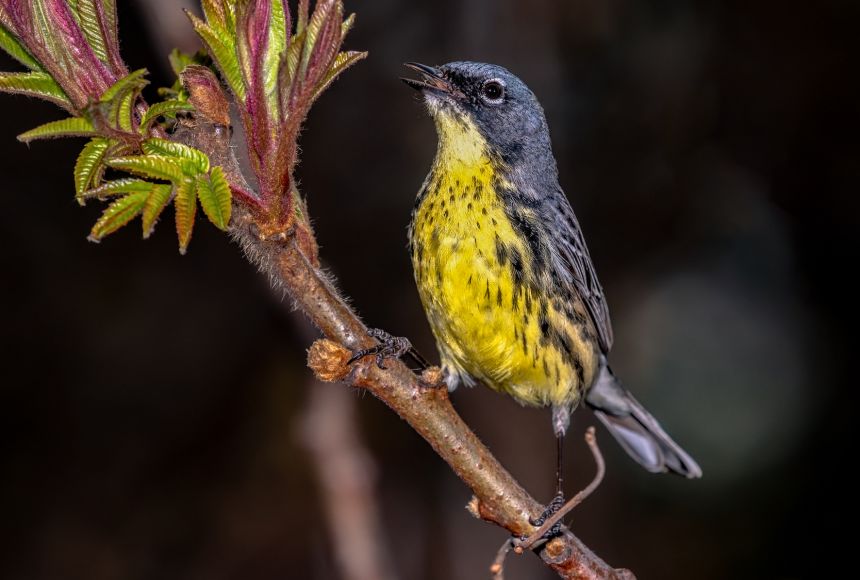
Kirtland's Warbler
A species' niche describes how it fits within its environment. The Kirtland's Warbler (Setophaga kirtlandii) has quite a specific niche, only nesting in young jack pine trees (Pinus banksiana).
Photograph by Jeff Rzepka/500px
In ecology, the term “niche” describes the role an organism plays in a community. A species’ niche encompasses both the physical and environmental conditions it requires (like temperature or terrain) and the interactions it has with other species (like predation or competition).
For example, the rare Kirtland’s warbler (Setophaga kirtlandii), a small songbird of North America, has a very limited niche. It nests only among young jack pine trees (Pinus banksiana), which require periodic wildfires for their seeds to germinate. In this environment, one of the species interactions it must contend with is nest parasitism by the brown-headed cowbird (Molothrus ater). Cowbirds lay their eggs in nests built by other bird species and these host birds then incubate and raise the cowbird’s young, often at the expense of their own babies.
In general, species that have narrow or limited niches are considered to be specialist species. Koalas (Phascolarctos cinereus), which feed only on leaves from eucalyptus trees in Australia, are an example of a specialist species. Species with broader niches, like coyotes (Canis latrans) or raccoons (Procyon lotor), are considered generalists. No two species can have the exact same niche, otherwise they would be in direct competition for resources with one another. If this occurs, then one species will outcompete the other. If the losing species then does not adapt, it would lead to its extinction.
Joseph Grinnell, an American ecologist, was the first person to develop the idea of an ecological niche. His definition, which he wrote about in scientific papers starting in 1917, focused on the environmental factors that determined where a species could survive rather than interactions between species. Around the same time, an English ecologist named Charles Elton was developing his own ideas about niches. In his definition, a species’ niche was determined by its interactions with other species—namely its relationships with food and predators.
Almost 40 years later, in the late 1950s, English ecologist G. Evelyn Hutchinson blended these two versions into a broader definition. This definition considers all abiotic and biotic factors that influence a species in a quantifiable way. This definition is still used by scientists today. It is important to keep learning about species’ niches today, because it can help us understand how organisms will respond to environmental changes caused by humans.
Credits
Media Credits
The audio, illustrations, photos, and videos are credited beneath the media asset, except for promotional images, which generally link to another page that contains the media credit. The Rights Holder for media is the person or group credited.
Director
Author
Production Managers
Program Specialists
Producer
Intern
other
Last Updated
October 19, 2023
User Permissions
For information on user permissions, please read our Terms of Service. If you have questions about how to cite anything on our website in your project or classroom presentation, please contact your teacher. They will best know the preferred format. When you reach out to them, you will need the page title, URL, and the date you accessed the resource.
Media
If a media asset is downloadable, a download button appears in the corner of the media viewer. If no button appears, you cannot download or save the media.
Text
Text on this page is printable and can be used according to our Terms of Service.
Interactives
Any interactives on this page can only be played while you are visiting our website. You cannot download interactives.