ENCYCLOPEDIC ENTRY
ENCYCLOPEDIC ENTRY
Ocean
Ocean
Traditionally divided into five regions, Earth's ocean covers about 71% of Earth’s surface.
Grades
5 - 8
Subjects
Biology, Ecology, Conservation, Earth Science, Oceanography
Image
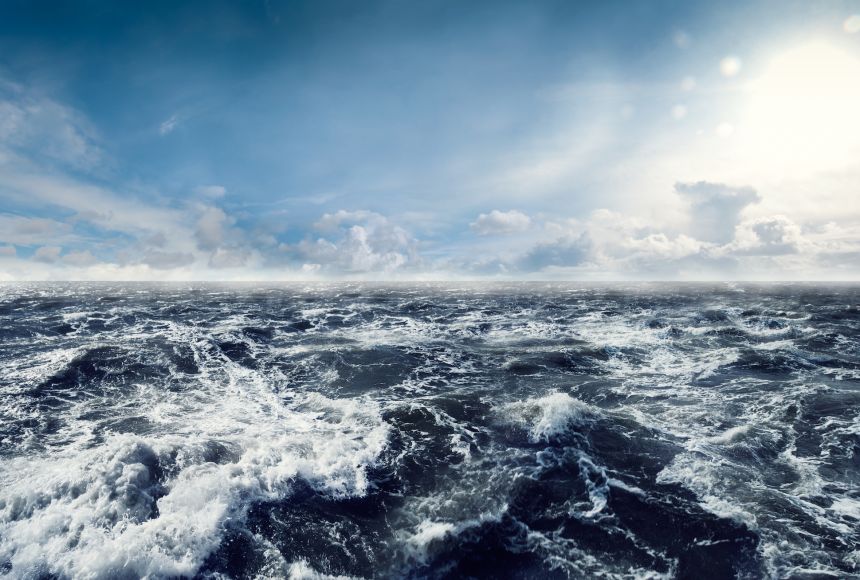
Ocean Waves
Open ocean water churning into waves
Photograph by Getty Images
The ocean is a huge body of salt water that covers about 71% of Earth’s surface. The planet has one global ocean, though oceanographers and the countries of the world have traditionally divided it into four distinct regions: the Pacific, Atlantic, Indian and Arctic oceans. Beginning in the 20th century, some oceanographers labeled the seas around Antarctica the Southern Ocean, and in 2021 National Geographic officially recognized this fifth ocean.
An estimated 97% of the world’s water is found in the ocean. Because of this, the ocean has considerable impact on weather, temperature and the food supply of humans and other organisms. Despite its size and impact on the lives of every organism on Earth, the ocean remains a mystery. More than 80% of the ocean has never been mapped, explored or even seen by humans. A far greater percentage of the surfaces of the moon and the planet Mars has been mapped and studied than of our own ocean floor.
Although there is much more to learn, oceanographers have already made some amazing discoveries. For example, we know that the ocean contains towering mountain ranges and deep canyons, known as trenches, just like those on land. The peak of the world’s tallest mountain—Mount Everest in the Himalaya, measuring 8.84 kilometers (5.49 miles) high—would not even break the surface of the water if it was placed in the Pacific Ocean’s Mariana Trench or Philippine Trench, two of the deepest parts of the ocean.
On the other hand, the Atlantic Ocean is relatively shallow because large parts of its seafloor are made up of continental shelves—parts of the continents that extend far out into the ocean. The average depth of the entire ocean is 3,720 meters (12,200 feet).
It is unknown how many different species call the ocean their home. With many marine ecosystems suffering from rising sea temperatures, pollution and other anthropogenic problems, some oceanographers believe the number of species is dropping. Still, there may be many positive surprises awaiting oceanographers in the years ahead. It could be that more than 90% of the ocean’s species are still undiscovered, with some scientists estimating that there are anywhere between a few hundred thousand and a few million more to be discovered. Currently, scientists know of around 226,000 ocean species.
Learning more about the seafloor and the rest of the ocean is the passion of National Geographic Explorer Marcello Calisti. He is a biorobotics expert who is developing an undersea exploration vehicle that uses “legged locomotion,” inspired by the way an octopus moves underwater. His long-range goal is to design robots that can explore the depths that are difficult for humans to reach.
Since the ocean is so vast, there is plenty for future oceanographers from all corners of the globe to explore and discover.



Credits
Media Credits
The audio, illustrations, photos, and videos are credited beneath the media asset, except for promotional images, which generally link to another page that contains the media credit. The Rights Holder for media is the person or group credited.
Director
Author
Production Managers
Program Specialists
Producer
other
Last Updated
August 24, 2026
User Permissions
For information on user permissions, please read our Terms of Service. If you have questions about how to cite anything on our website in your project or classroom presentation, please contact your teacher. They will best know the preferred format. When you reach out to them, you will need the page title, URL, and the date you accessed the resource.
Media
If a media asset is downloadable, a download button appears in the corner of the media viewer. If no button appears, you cannot download or save the media.
Text
Text on this page is printable and can be used according to our Terms of Service.
Interactives
Any interactives on this page can only be played while you are visiting our website. You cannot download interactives.