ENCYCLOPEDIC ENTRY
ENCYCLOPEDIC ENTRY
Omnivores
Omnivores
An omnivore is an organism that eats a variety of other organisms, including plants, animals and fungi.
Grades
5 - 8
Subjects
Biology, Ecology, Conservation
Image
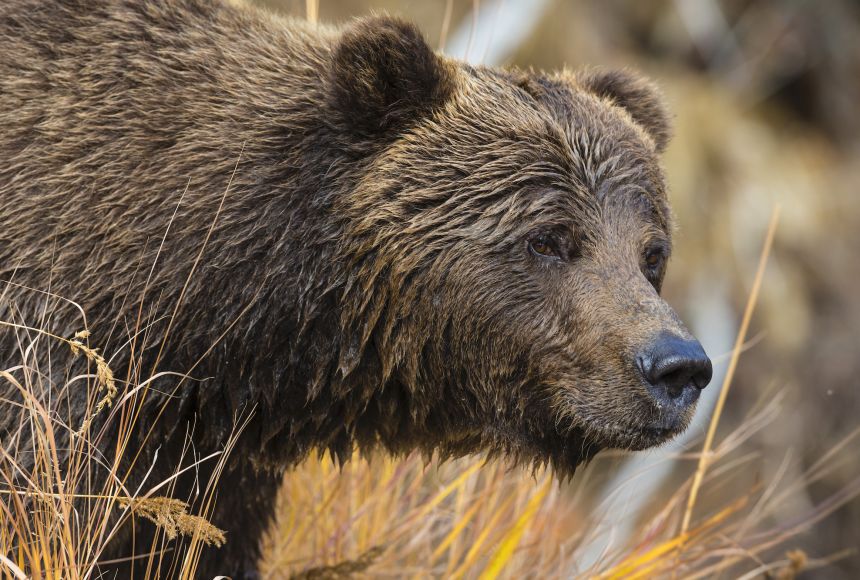
Grizzly Male at River
Despite their huge size and sharp teeth, bears—like this male grizzly (Ursus arctos horribilis) at the Fishing Branch River in the Yukon Territory, Canada—also eat berries and twigs. Like other omnivores, their diets are versatile.
Photograph by Paul Nicklen
An omnivore is an organism that eats plants and animals. The term stems from the Latin words omnis, meaning “all or everything,” and vorare, meaning “to devour or eat.”
Omnivores play an important part of the food chain, a sequence of organisms that produce energy and nutrients for other organisms. Every food chain consists of several trophic levels, which describe an organism’s role in an ecosystem. Omnivores generally occupy the third trophic level alongside meat-eating carnivores.
Omnivores are a diverse group of animals. Examples of omnivores include bears, birds, dogs (Canis familiaris), raccoons, foxes, certain insects,and even humans.
Animals that hunt other animals are known as predators, while those that are hunted are known as prey. Since omnivores hunt and are hunted, they can be both predators and prey. Omnivores can also be scavengers, animals that feed on the remains of dead animals. For example, bears eat twigs and berries but will also hunt small animals and eat dead animals if they happen to stumble upon them.
Omnivores have evolved various traits to help them eat both plants and animals. Many omnivores, such as humans, have a mixture of sharp teeth (for ripping through muscle tissue) and flat molars (for grinding plant matter). However, some omnivores, like chickens (Gallus gallus), have no teeth and swallow their food whole. Generally speaking, omnivores have a stomach with one or more chambers and a specialized digestive tract to process food.
Since omnivores have a diverse diet, they have the advantage of being able to survive in a variety of environments. While a meat-eating carnivore would quickly go extinct in a habitat devoid of prey, an omnivore could still survive by eating plants.
Credits
Media Credits
The audio, illustrations, photos, and videos are credited beneath the media asset, except for promotional images, which generally link to another page that contains the media credit. The Rights Holder for media is the person or group credited.
Director
Author
Production Managers
Program Specialists
Producer
Intern
other
Last Updated
August 12, 2026
User Permissions
For information on user permissions, please read our Terms of Service. If you have questions about how to cite anything on our website in your project or classroom presentation, please contact your teacher. They will best know the preferred format. When you reach out to them, you will need the page title, URL, and the date you accessed the resource.
Media
If a media asset is downloadable, a download button appears in the corner of the media viewer. If no button appears, you cannot download or save the media.
Text
Text on this page is printable and can be used according to our Terms of Service.
Interactives
Any interactives on this page can only be played while you are visiting our website. You cannot download interactives.