ENCYCLOPEDIC ENTRY
ENCYCLOPEDIC ENTRY
Organelles
Organelles
Organelles are specialized structures that perform various tasks inside cells.
Grades
11, 12
Image
organelles
Just as organs are separate body parts that perform certain functions in the human body, organelles are microscopic sub-units that perform specific functions within individual cells.
Photograph by Science Source
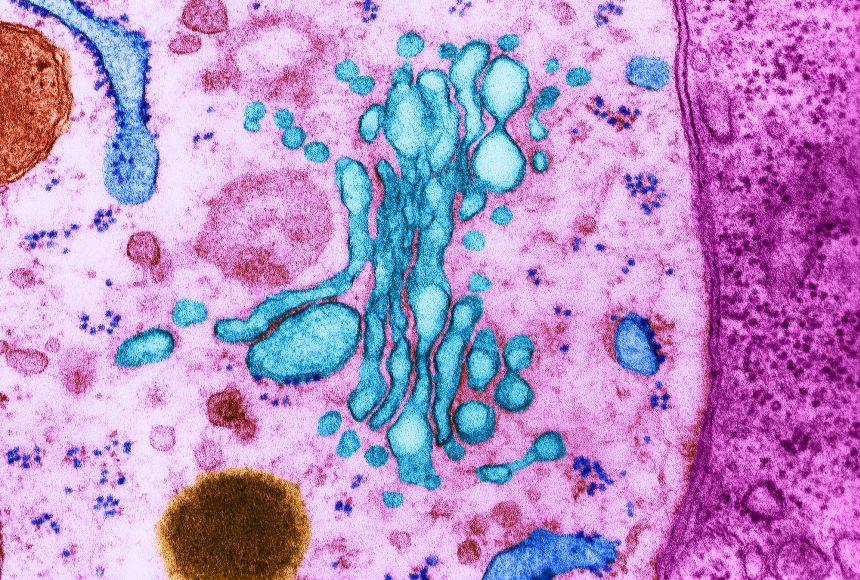
Organelles are specialized structures that perform various jobs inside cells. The term literally means “little organs.” In the same way organs, such as the heart, liver, stomach, and kidneys, serve specific functions to keep an organism alive, organelles serve specific functions to keep a cell alive.
Cells are grouped into two different categories, prokaryotic cells and eukaryotic cells, which are primarily differentiated by the presence of one organelle, the nucleus. Prokaryotic cells do not have a nucleus, whereas eukaryotic cells do. A nucleus is a large organelle that stores DNA and serves as the cell’s command center. Single-cell organisms are usually prokaryotic, while multi-cell organisms are usually made of eukaryotic cells.
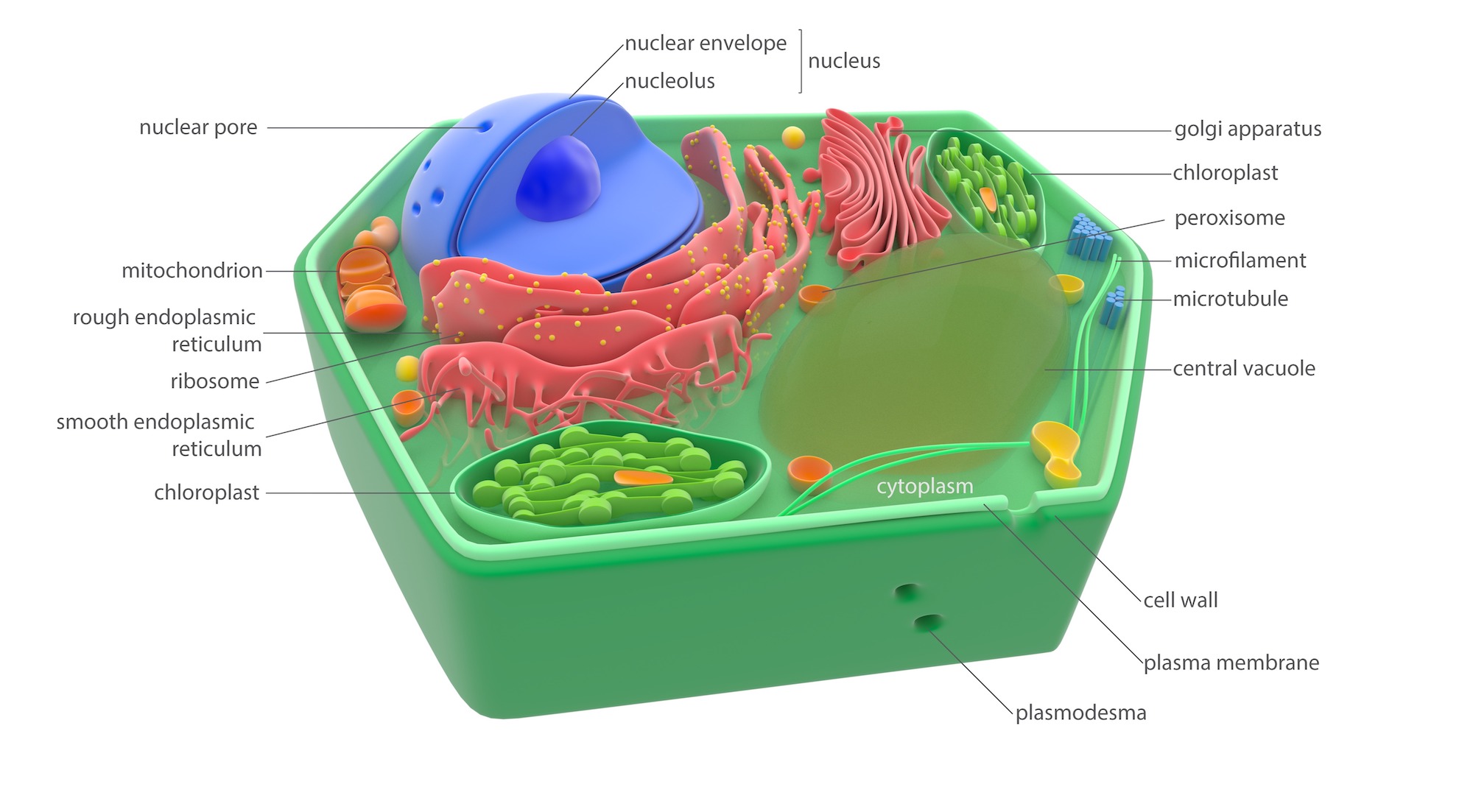
Another large organelle found in eukaryotic cells is the mitochondrion, an organelle responsible for making ATP, a chemical that organisms use for energy. Cells often contain hundreds of mitochondria. These mitochondria have an outer membrane, which encases the organelle, and an inner membrane, which folds over several times to create a multi-layered structure known as cristae. The fluid inside the mitochondria is called the matrix, which is filled with proteins and mitochondrial DNA.
Chloroplasts are another organelle that contain a double membrane and retain their own DNA. Unlike mitochondria, however, the inner membrane of chloroplasts is not folded. They do, however have a third, internal membrane called the thylakoid membrane, which is folded. In addition, unlike mitochondria, chloroplasts are only present in plant cells. They are responsible for converting sunlight into energy through a process called photosynthesis.
Other organelles like lysosomes are responsible for digesting and recycling toxic substances and waste. They are embedded with proteins called enzymes, which break down macromolecules, including amino acids, carbohydrates, and phospholipids. Lysosomes are produced by a larger organelle called the Golgi complex, which manufactures other cellular machinery as well. Whenever a cell dies, it self-destructs using its own lysosomes.
Credits
Media Credits
The audio, illustrations, photos, and videos are credited beneath the media asset, except for promotional images, which generally link to another page that contains the media credit. The Rights Holder for media is the person or group credited.
Director
Author
Production Managers
Program Specialists
other
Last Updated
August 18, 2026
User Permissions
For information on user permissions, please read our Terms of Service. If you have questions about how to cite anything on our website in your project or classroom presentation, please contact your teacher. They will best know the preferred format. When you reach out to them, you will need the page title, URL, and the date you accessed the resource.
Media
If a media asset is downloadable, a download button appears in the corner of the media viewer. If no button appears, you cannot download or save the media.
Text
Text on this page is printable and can be used according to our Terms of Service.
Interactives
Any interactives on this page can only be played while you are visiting our website. You cannot download interactives.