ARTICLE
leveledARTICLE
People and Invasive Species
People and Invasive Species
Invasive species—organisms not native to a particular area—are one of the leading causes of global biodiversity loss, and humans are the reason why.
Grades
2 - 12
Subjects
Biology, Ecology, Conservation, Geography
Image
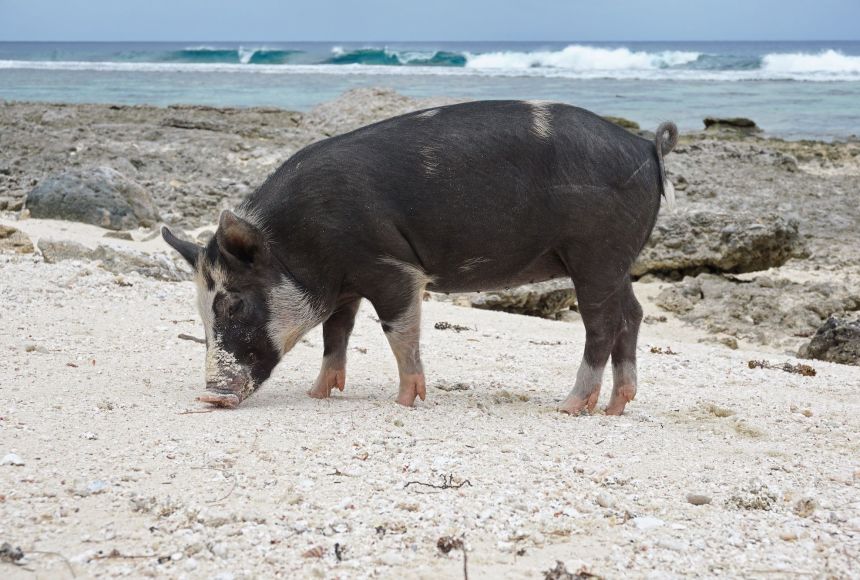
Wild Pig in French Polynesia
Humans have sometimes brought organisms to lands they are new to, making them invasive species. One such animal is the domesticated pig (Sus domesticus). They were taken to the islands of the South Pacific as a food source.
Photograph by Damsea
An invasive species is an organism that came from somewhere else and can do harm to its new ecosystem. Invasive species can damage native areas, spread diseases, and cause extinctions of other animals.
In a new environment, an invasive species can suddenly take over. Their populations can grow quickly and crowd out native species. Invasive species can use up food and water. They often lack predators in their new home. In many cases, native species cannot compete against the new invader.
Not all species introduced to a new area are invasive. Sometimes, there are benefits to new species. For example, common foods, such as potatoes and tomatoes, came from the Americas. Explorers introduced them to the rest of the world through farming. An introduced species is only considered to be invasive if it causes harm.
Human Influence
Invasive species are almost always spread by humans. People and goods can move all over the planet. They often take invasive species with them. Often it is by accident.
As they traveled the globe, early explorers introduced many invasive species, such as dogs (Canis familiaris), cats (Felis catus), pigs, and rats. For example, Norway rats (Rattus norvegicus), also called brown rats, came from China. They spread to the Pacific Islands on ships during the 1700s. They eat native species and spread deadly diseases. Invasive feral pigs (Sus scrofa) live on the islands of Hawai'i in the United States. Feral pigs dig up plants and damage soil. Early Polynesian settlers might have brought the pigs for farming.
The Asian plant kudzu (Pueraria montana var. lobata) came to the U.S. during the 1876 World's Fair in Philadelphia, Pennsylvania. In the 1930s, people in the southern United States planted the fast-growing vine. They hoped this would prevent soil erosion. But the kudzu grew out of control.
Other times, invasive species were introduced to control pests. The cane toad (Bufo marinus) comes from South and Central America. It was introduced to Australia in the 1930s. People hoped the toad would eat pests in sugar cane plantations. But then the cane toads became a problem. The toad is toxic. It can be deadly to predators who try to eat it.
Trade and Travel Moves Invasive Species along
Today, we know more about what happens when we move organisms outside of their natural homes. We now try to keep them from spreading. But people continue to introduce invasive species through trade and travel.
For example, in the U.S. Florida Everglades, Burmese pythons (Python bivittatus) are causing problems. These snakes make popular pets but grow to be incredibly large. Owners have released them into the wild to get rid of them. The pythons eat local birds and even alligators. The Burmese python has no natural predators in Florida, so their population is thriving.
Lionfish live in the South Pacific and Indian Ocean. But they have quickly spread through the Atlantic Ocean, Gulf of Mexico, and the Caribbean Sea. Lionfish eat the native fish. They damage fisheries and coral reef ecosystems.
What Can Be Done?
Most countries have rules about what can and cannot be brought across their borders. Education is also important. Some invasive plants can be turned into paper. Some invasive fish such as lionfish can be eaten.
The invasive species problem was started by humans. But humans can also be part of the solution.
Credits
Media Credits
The audio, illustrations, photos, and videos are credited beneath the media asset, except for promotional images, which generally link to another page that contains the media credit. The Rights Holder for media is the person or group credited.
Director
Author
Production Managers
Program Specialists
Producer
Intern
other
Last Updated
October 19, 2023
User Permissions
For information on user permissions, please read our Terms of Service. If you have questions about how to cite anything on our website in your project or classroom presentation, please contact your teacher. They will best know the preferred format. When you reach out to them, you will need the page title, URL, and the date you accessed the resource.
Media
If a media asset is downloadable, a download button appears in the corner of the media viewer. If no button appears, you cannot download or save the media.
Text
Text on this page is printable and can be used according to our Terms of Service.
Interactives
Any interactives on this page can only be played while you are visiting our website. You cannot download interactives.