ENCYCLOPEDIC ENTRY
ENCYCLOPEDIC ENTRY
Sarcophagi
Sarcophagi
Used to bury leaders and wealthy residents in ancient Egypt, Rome, and Greece, a sarcophagus is a coffin or a container to hold a coffin. Most sarcophagi are made of stone and displayed above ground.
Grades
5 - 8
Subjects
Anthropology, Archaeology, Social Studies, Ancient Civilizations
Image
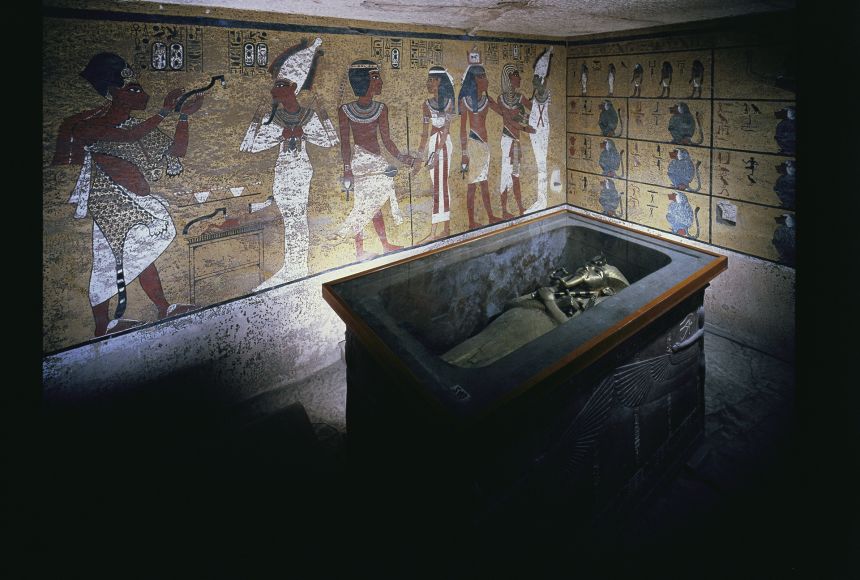
King Tut burial chamber
King Tutankhamun was laid to rest here in this well-decorated burial chamber. The paintings on the walls depict scenes of his afterlife, while his mummified body was kept safe in a gold coffin nestled inside a stone sarcophagus.
Photograph by Victor R. Boswell, Jr.
A sarcophagus is a stone coffin or a container to hold a coffin. Although early sarcophagi were made to hold coffins within, the term has come to refer to any stone coffin that is placed above ground. The earliest stone sarcophagi were used by Egyptian pharaohs of the 3rd dynasty, which reigned from about 2686 to 2613 B.C.E.
Ancient Egyptians believed in an afterlife, and the sarcophagus was to be the eternal dwelling place of those within it. The sarcophagi of pharaohs and wealthy residents were elaborately decorated with carvings and paintings. The earliest sarcophagi were designed for the pharaohs of Egypt and reflected the architecture of their palaces. Egyptians believed that remembering a person’s name would ensure that he or she would live on in the afterlife, so a sarcophagus also typically included the name of the person or people buried within. External decorations might also record the accomplishments of the deceased. Sarcophagi also typically included a list of food offerings, a door for the soul to pass through, and eyes so that the decedent could continue to view the world. Eventually, sarcophagi were carved to look like the person within, following the curve of the mummy’s body. Sarcophagi might hold more than one coffin. They often had pitched roofs. Beginning at the end of the thirteenth century, sarcophagi were put on sleds or runners so that they could be more easily towed to the cemetery.
The sarcophagus was an important part of an elaborate burial process. Ancient Egyptians believed that they would live on in an afterlife. They prepared a dead person for this afterlife by embalming the body and wrapping it in linens, a process known as mummification. The body was then placed carefully into a mummy case—a box that fit between the mummy and the coffin. The coffin would then be placed within the sarcophagus. Sometimes, the sarcophagus served in place of a coffin.
Some sarcophagi remained hidden for thousands of years. In July of 2018, for instance, Egyptian archaeologists explored a huge 30-ton sarcophagus of black granite that had been discovered at a construction site in Alexandria, Egypt. Inside were the remains of three mummies. Early reports that they were military officers were overturned when DNA analysis revealed that one of the corpses was a woman. Unlike the sarcophagi of the wealthy class, there were neither inscriptions on the sarcophagus nor goods buried with the corpses within, except for a small gold artifact and three sheets of gold. This leaves few clues about who they were or when they lived, creating the very kind of mystery that archaeologists love to solve.
In addition to ancient Egypt, ancient Rome and Greece are also known for using sarcophagi. The carvings on the sarcophagi and the treasures within continue to surprise and delight historians and scientists, giving insight into ancient cultures.
Credits
Media Credits
The audio, illustrations, photos, and videos are credited beneath the media asset, except for promotional images, which generally link to another page that contains the media credit. The Rights Holder for media is the person or group credited.
Director
Author
Production Managers
Program Specialists
other
Last Updated
October 19, 2023
User Permissions
For information on user permissions, please read our Terms of Service. If you have questions about how to cite anything on our website in your project or classroom presentation, please contact your teacher. They will best know the preferred format. When you reach out to them, you will need the page title, URL, and the date you accessed the resource.
Media
If a media asset is downloadable, a download button appears in the corner of the media viewer. If no button appears, you cannot download or save the media.
Text
Text on this page is printable and can be used according to our Terms of Service.
Interactives
Any interactives on this page can only be played while you are visiting our website. You cannot download interactives.